Thursday, February 14, 2019

English 10--2/16/2019

Jump Off
--On your desk, you will find the first "60/40" assessment for Paulo Coelho's The Alchemist.  Please look through your assessment and any commentary that I provided with the awareness that upon our return from February Break, you can expect the next "60/40" assessment to occur.  (FYI: I will be around to re-collect your assessments in a few minutes.)
--Please SEE ME at the end of today's class block:
  • S. Gwyn
  • C. Kearney
  • E. Smith
  • P. Thousand
  • T. Willis
S. the C.
--agenda/HW

Transition
--In preparation for today's quick-write, we will first view the following TedEd video titled "What Makes a Hero?":

https://ed.ted.com/lessons/what-makes-a-hero-matthew-winkler
  • Q & A
--Please pick up a copy of the halfsheet titled "Monomyth (Hero's Journey) Pattern Diagram" from the front table.
--Open your notebook to the section labeled "The Alchemist--Quick Write #5".  Draw a line under what you wrote last class block.  Date this section of your notes (2/15/2019) and label it "The Alchemist--Quick Write #6".

Thinking, Writing, and Looking Ahead Activity/Discussion Preparation -- The Alchemist--Quick Write #6 (8-10 mins.)
--write for 8 minutes in response to one of the prompts below:
  • What book have you read, movie have you seen, show have you watched, etc. that seems to follow the hero's journey pattern?  How so?
    • Example: Tommy Boy
      • https://www.youtube.com/watch?v=3a1aaxJ3omw
      • https://www.youtube.com/watch?v=qSj2bvKtDSQ
  • Paulo Coelho's The Alchemist follows the hero's journey pattern.  How so?
  • "You leave your comfort zone, have an experience that transforms you, and then, you recover and do it again."  Write about about this quotation and how it relates to...
    • your life journey as a whole OR
    • a mini-journey-within-your-greater-life-journey.
      • Example: Caleb Martin
  • "What is the symbolic cave you fear to enter?"  Write about it!
    • Example: AP Seminar
Discussion Preparation -- The Alchemist up to page 123 (2-3 mins.)
--Please take out your copy of the sheet titled "The Alchemist up to page 84--Discussion Preparation".  Next, we will continue engaging in discussion using the protocol below and the rating scale on the back of the sheet with which you are working.  Spend the next few minutes of class making sure that you are prepared.  Other contributions that you might consider sharing:
  • your quick write from before lunch last class block
  • items related to the notes that we took last class block ("APHORISM", "FOIL", and "MOTIF")
  • today's quick write
Discussion Protocol
  • Indicate your readiness (or lack thereof) via your “Ready to Answer/Still Thinking” sign.
  • Raise your hand (respectfully) when you wish to be called upon to contribute.
  • Attentively listen to contributors.
  • The next contributor is selected by the previous contributor and ideally stays on the same discussion “thread”--try to “rope in” as many contributors as possible throughout the discussion.
  • There is not a limit placed on total contributions per person today, but each of you must contribute at least once (class participation grade determined via “Discussion Contribution Rating Scale”), and no one can contribute a second time until everyone has contributed once, which means that we will first hear from everyone who did not get a chance to contribute last time. 
  • I reserve the right to “jump in” to the conversation where appropriate and randomly select students to speak.
  • Notes will be written on the whiteboard by a classmate--you are expected to copy these notes onto your sheet/into your notebook.
Transition
--form a circle via a drawing of cards

Discussion -- The Alchemist up to page 123 (2-3 mins.) 
--engage in discussion as per the protocol

HW Time (time permitting)

MATCH FORMS HANDED OUT BEFORE STUDENTS LEAVE!


HW (Practice/Take-Home Assessment)
--WE ARE TAKING A BREAK FROM MEMBEAN 2/15-2/21; HOWEVER, YOU CAN STILL TRAIN THESE NEXT 7 DAYS (AND ARE HIGHLY ENCOURAGED TO DO SO IF YOU HAVE FALLEN BEHIND)!
--Complete another 45 minutes of Membean training in three different days before 11:59 PM Thursday, 2/28 (see the "English Department Membean Routine" sheet).

HW (Class Preparation/Take-Home Assessment)
--Read up to the second page break on page 143 of The Alchemist.  Demonstrate your best skill level in "first-draft" reading, aiming to both basically comprehend the text and respond to the following questions:
  • How does Coelho continue portraying his "Four Obstacles" philosophy through his characters? 
  • Why do the characters that we encounter in the novella say what they say, do what they do, etc.?  What are human beings really like?
  • What in this section of reading further develops any of the commentary from the discussion that occurred both last class and today?  How so?
  • What "things" (e.g., aphorism, flashback, foil, the hero's journey, irony, motif, symbolism, etc.) do you notice Coelho purposefully using/doing that help show his life philosophy (and, perhaps, help you clarify your "why?")?  (YOU CAN USE YOUR "LITERARY DEVICES REVIEW" SHEET FROM LAST CLASS BLOCK AND YOUR "MONOMYTH (HERO'S JOURNEY) PATTERN DIAGRAM" FROM TODAY'S CLASS BLOCK TO TRACK SOME OF THIS!)
Reminder: the nature of a typical “first-draft” reading of a difficult text:
  • A gist reading = “survival mode” in order to understand/comprehend the text on a literal level
    • Ask the “curious questions”
    • Basic comprehension is essential if any deeper understanding is to occur.
  • Easier with some sort of defined purpose (therefore, often a purposeful reading)
  • Most effective when it is still somewhat active reading (annotate: jot down curious questions, jot down notes related to your defined purpose[s], etc.)
Expect any or all of the following to occur during our next class block: 
  • A "60/40" READING ASSESSMENT
  • a discussion geared around your "first-draft" reading
We will finish the novella in class together upon our return from break.
Writing
--Continue thinking about the following questions:
  • Research Unit: What might you argue with regard to your research topic?
    • I would like for us to head back over to the library again sometime soon!
  • End-of-Course Assignment: What is your "why?"?
HW (Class Preparation)

--I challenge you to read 10 (or more!) "steps" of free reading over February Break.  A step equals 15 minutes, so 10 steps equals 150 minutes/2.5 hours.  Remember that your free reading book must be finished by mid-March.  ALWAYS BRING YOUR FREE READING BOOK TO CLASS!
  • "Reading...a vacation for the mind..." (Dave Barry).
Miscellaneous
--If you complete the Valentine's Day match form, submit it to Mrs. D'Imperio ASAP.
--Be thinking about the memoir genre.  Whose life/what "type" of life would you like to read about during the last 12 weeks of the school year?
--Consider working toward achievement of your S.M.A.R.T. Goal.  Your deadline is likely approaching!
--Enjoy your vacation--you truly only get so many of 'em! :)


On the backburner:
  • Library
    • print a promising source procured from a database
    • back at the classroom, engage in active/purposeful reading as per the same directions given on last AoW

English 10 Honors--2/15/2019

Jump Off
--Please take out your conventions of literature materials from the past few class blocks.
--Please pick up a square of index card from the front table.  When we return from break, following a purposeful viewing of the film that we choose (majority rules!), you will write a two-three paragraph response in which you...
  • show that one of the conventions of literature is being implemented within the film
  • explain how the director uses the convention to develop an emergent theme of the story.
Quietly and independently, vote on a film to analyze by writing your choice on your square of index card.
  • The Croods
  • Finding Nemo
  • Inside Out
  • The Lego Movie
  • The Lion King
  • Monsters, Inc.
  • Shrek
S. the C.
--Reminder #1: The order of today's lessons (SEE THE SOUTHERN WHITEBOARD)
--Reminder #2: Following your group's lesson, your peers must understand the following about your convention:
  • What it is
  • How to identify it
  • Why authors use it
--agenda/HW

"Gearing Up" for Lord of the Flies Activity (Phase 1) (cont.) -- Learning Conventions of Literature via Thomas C. Foster's How to Read Literature Like a Professor (until 5-ish mins. remaining in class)
--remaining lessons taught/notes taken as per established order

Looking Ahead -- Applying the Conventions of Literature to Animated Film
--When we return from break, following a purposeful viewing of the film that we choose (majority rules!), you will write a two-three paragraph response in which you...
  • show that one of the conventions of literature is being implemented within the film
  • explain how the director uses the convention to develop an emergent theme of the story.
--vote on a film to analyze:
  • The Croods
  • Finding Nemo
  • Inside Out
  • The Lego Movie
  • The Lion King
  • Monsters, Inc.
  • Shrek
Closure -- Ball Toss (time permitting)
--Tell us something that you now know/understand that you did not know/understand/fully understand before class today.

HW Time (time permitting)

MATCH FORMS HANDED OUT BEFORE STUDENTS LEAVE!


HW (Practice/Take-Home Assessment)
--WE ARE TAKING A BREAK FROM MEMBEAN 2/15-2/21; HOWEVER, YOU CAN STILL TRAIN THESE NEXT 7 DAYS (AND ARE HIGHLY ENCOURAGED TO DO SO IF YOU HAVE FALLEN BEHIND)!
--Complete another 45 minutes of Membean training in three different days before 11:59 PM Thursday, 2/28 (see the "English Department Membean Routine" sheet).
Writing
--Consider doing the following if you have not already done so:
  • Reread your short story with "fresh eyes", taking note of the commentary (albeit quite brief!) that I have included on your draft.
  • Access the electronic version of your short story and begin revising it.
Consider, too, the potential for including a convention of literature in your piece!
HW (Class Preparation)
--I challenge you to read 10 (or more!) "steps" of free reading over February Break.  A step equals 15 minutes, so 10 steps equals 150 minutes/2.5 hours.  Remember that your free reading book must be finished by mid-March.  ALWAYS BRING YOUR FREE READING BOOK TO CLASS!
  • "Reading...a vacation for the mind..." (Dave Barry).
Miscellaneous
--If you complete the Valentine's Day match form, submit it to Mrs. D'Imperio ASAP.
--Consider working toward achievement of your S.M.A.R.T. Goal.  Your deadline is likely approaching!
--Enjoy your vacation--you truly only get so many of 'em! :)


On the Backburner
--"Poetry Assessment #1" back
  • complete "cheat sheet" while going over
--group writing assignment back
--preparing to read LotF

English 9--2/14/2019 & 2/15/2019

Jump Off
--30-ish minutes from now, poster presentations will begin.  Please spend the first 15 minutes of class doing one or a combination of the following:
  • Finish your visually appealing poster, making sure that it includes...
    • the term prominently displayed
    • the paraphrased definition of your term
    • an example of your term "in action"
    • a corresponding visual.
  • Log in to Membean.  Set up and complete a training session (up to 15 minutes).
  • Engage in free reading.
S. the C.
--You should leave class today...
  • with a basic understanding of each of the terms included in the "Drama Terms Notes/Poetry Terms Notes" document
  • with the "Drama Terms Notes/Poetry Terms Notes" document accurately completed so that you can use it to review each of the terms that you have not yet mastered 
  • better equipped to appropriately understand and analyze William Shakespeare's The Tragedy of Romeo and Juliet when we continue grappling with the text after break
--agenda/HW

Mini-Presentations/Notetaking -- Drama Terms Notes/Poetry Terms Notes
--directions given:
  • Prepare a brief presentation to share with the rest of the class in which you...
    • share your term and paraphrased definition
    • make sure that your classmates are able to accurately fill in the blanks on their notes page for your term
    • share your example and visual in order to clarify the meaning of your term
    • are prepared to respond to any questions from your classmates regarding your term.
--When preparing/practicing your mini-presentation, keep this information about content and these seven public speaking tips in mind:

Content
    • Your presentation must include all four of the items included in the bulleted list above, but you should not just read from your notes page and your poster!
    Delivery (Public Speaking Tips)
    • Pause (and, ideally, smile!) in front and gain the attention of your audience before speaking.
    • Speak loudly enough to be heard by all.
    • Speak at an appropriate speed (NOT TOO FAST).
    • Speak with enthusiasm.
    • Make clear attempts at eye contact to ALL parts of the classroom.
    • Limit vocal fillers ("umm", "ahh", long silences, etc.)--NO MORE THAN 3-5 PER MINUTE.
    • Limit distracting body movements (podium tapping, hair smoothing, etc.). 
    --mini-presentations practiced in pairs
    --mini-presentations delivered/notetaking

    Closure -- Ball Toss (time permitting)
    --Tell us something that you now know/understand that you did not know/understand/understand fully before class today.

    HW (Practice/Take-Home Assessment)
    --ACE classes: Complete 45 minutes of Membean training in three different days before 11:59 PM TONIGHT (Thursday, 2/14) (see the "English Department Membean Routine" sheet).
    --WE ARE TAKING A BREAK FROM MEMBEAN 2/15-2/21; HOWEVER, YOU CAN STILL TRAIN THESE NEXT 7 DAYS (AND ARE HIGHLY ENCOURAGED TO DO SO IF YOU HAVE FALLEN BEHIND)!
    --Complete another 45 minutes of Membean training in three different days before 11:59 PM Thursday, 2/28 (see the "English Department Membean Routine" sheet).
    HW (Class Preparation)
    --I challenge you to read 10 (or more!) "steps" of free reading over February Break.  A step equals 15 minutes, so 10 steps equals 150 minutes/2.5 hours.  Remember that your free reading book must be finished by mid-March.  ALWAYS BRING YOUR FREE READING BOOK TO CLASS!
    • "Reading...a vacation for the mind..." (Dave Barry).
    --Sometime within the first few weeks upon our return from break, a The Tragedy of Romeo and Juliet Unit mini-test will occur.  In order to begin preparing, consider...
    • reviewing your "Purposeful Viewing of Gnomeo & Juliet" document
    • reviewing your "Drama Terms Notes/Poetry Terms Notes" document
    • reviewing your "The Shakespearean Sonnet" document.
    Miscellaneous
    --Consider working toward achievement of your S.M.A.R.T. Goal.  Your deadline is likely approaching!
    --Enjoy your vacation--you truly only get so many of 'em! :)


    On the backburner:
    • Finishing Gnomeo & Juliet by further discussing/returning to guide
      • opening a window into The Tragedy of Romeo and Juliet
      • continuing to master Reading Literature standards, irony, and theme
      • Prior to "The Interlopers", complete acting activity reviewing the types of irony from both Gnomeo & Juliet and Act 1 of The Tragedy of Romeo and Juliet.
    • Writing returned/revised in waves
      • Wave 1?!?!
      • Wave 2--organization as per sample paragraphs for "The Cask of Amontillado"
        • Prior to "The Interlopers", share a few paragraphs as review of both organization and concepts therein.
      • Wave 3--grammar hammer as per common errors
    • Continuing to master Reading Literature standards, irony, and theme
    • Short works--The Tragedy of Romeo and Juliet Unit
      • Poe's "The Cask of Amontillado"
      • Saki's "The Interlopers"

    Monday, February 11, 2019

    English 10--2/13/2019

    Jump Off
    --Open your notebook to the section labeled "The Alchemist--Quick Write #4".  Draw a line under what you wrote last week.  Date this section of your notes (2/13/2019) and label it "The Alchemist--Quick Write #5".
    --As those of you who were here know, last class block, each student talked about a life event from the life event graph experience for a minimum of 60 seconds.  At the start of today's class block, the following students will share:
    • L. Allison
    • S. Gunn
    --Please SEE ME at the end of today's class block:
    • S. Gwyn
    • C. Kearney
    • E. Smith
    • P. Thousand
    • T. Willis
    S. the C.
    --last two 60-Second Club: Sharing a Life Event speeches delivered
    --J-Mac video shown in order to preview our next endeavor
    --agenda/HW

    Thinking, Writing, and Looking Ahead Activity -- The Alchemist--Quick Write #5 (8-10 mins.)
    --write for 8 minutes in response to the prompt below:
    • One of the main purposes behind reading Paulo Coelho's The Alchemist in English 10 is to help students continue exploring the "why?" question.  At this point in the course, where do you stand with regard to the following question: What is your "why?"?  What have you thought about, understood, realized, etc. while reading The Alchemist that has aided (or hindered!) you?
    Transition
    --Please pick up a copy of the sheet titled "Literary Devices Review" from the front table.

    Notetaking -- Literary Devices Review
    --examples shared/definitions completed

    https://www.youtube.com/watch?v=S2XvxDaIwCw

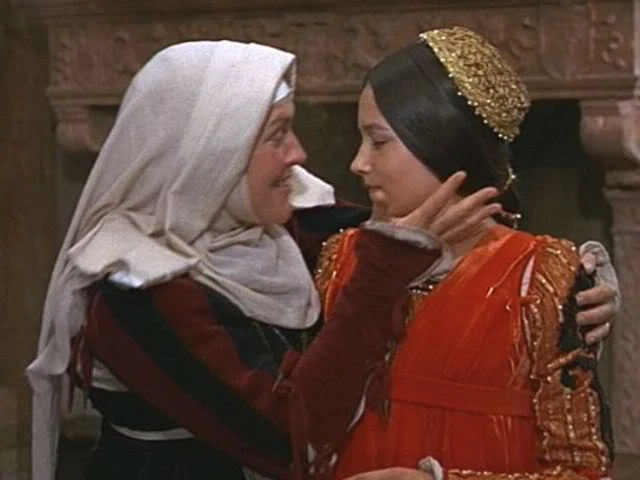
    Image result for nurse juliet

    https://www.youtube.com/watch?v=YiqCuyj6NvI

    Discussion Preparation -- The Alchemist up to page 104 (2-3 mins.)
    --Please take out your copy of the sheet titled "The Alchemist up to page 84--Discussion Preparation".  Next, we will engage in discussion using the protocol below and the rating scale on the back of the sheet with which you are working.  Spend the next few minutes of class making sure that you are prepared.  Other contributions that you might consider sharing:
    • your quick write from before lunch
    • items related to the notes that we just took
    AS YOU WORK, I WILL RETURN YOUR FIRST 60/40 ASSESSMENT FOR THE NOVELLA.  (FYI: I WILL BE RECOLLECTING THESE!)

    Discussion Protocol
    • Indicate your readiness (or lack thereof) via your “Ready to Answer/Still Thinking” sign.
    • Raise your hand (respectfully) when you wish to be called upon to contribute.
    • Attentively listen to contributors.
    • The next contributor is selected by the previous contributor and ideally stays on the same discussion “thread”--try to “rope in” as many contributors as possible throughout the discussion.
    • There is not a limit placed on total contributions per person today, but each of you must contribute at least once (class participation grade determined via “Discussion Contribution Rating Scale”), and no one can contribute a second time until everyone has contributed once.
    • I reserve the right to “jump in” to the conversation where appropriate and randomly select students to speak.
    • Notes will be written on the whiteboard by a classmate--you are expected to copy these notes onto your sheet/into your notebook.
    Transition
    --Consider the following question:
    • What ONE WORD best captures your plans for/vision of the upcoming February Break?
    --form an alphabetized-by-one-word-response circle out of the desks

    Discussion -- The Alchemist up to page 104 (2-3 mins.) 
    --engage in discussion as per the protocol

    HW Time (time permitting)

    HW (Practice/Take-Home Assessment)
    --Complete 45 minutes of Membean training in three different days before 11:59 PM this Thursday, 2/14 (see the "English Department Membean Routine" sheet).
    HW (Class Preparation/Take-Home Assessment)
    --Read pages 104-123 of The Alchemist.  Demonstrate your best skill level in "first-draft" reading, aiming to both basically comprehend the text and respond to the following questions:
    • How does Coelho continue portraying his "Four Obstacles" philosophy through his characters? 
    • Why do the characters that we encounter in the novella say what they say, do what they do, etc.?  What are human beings really like?
    • What in this section of reading further develops any of the commentary from today's discussion?  How so?
    • What "things" (e.g., aphorism, flashback, foil, irony, motif, symbolism, etc.) do you notice Coelho purposefully doing that help show his life philosophy (and, perhaps, help you clarify your "why?")?  (YOU CAN USE YOUR "LITERARY DEVICES REVIEW" SHEET FROM EARLIER IN CLASS TO TRACK THIS!)
    Reminder: the nature of a typical “first-draft” reading of a difficult text:
    • A gist reading = “survival mode” in order to understand/comprehend the text on a literal level
      • Ask the “curious questions”
      • Basic comprehension is essential if any deeper understanding is to occur.
    • Easier with some sort of defined purpose (therefore, often a purposeful reading)
    • Most effective when it is still somewhat active reading (annotate: jot down curious questions, jot down notes related to your defined purpose[s], etc.)
    Expect any or all of the following to occur during our next class block: 
    • a "60/40" reading assessment
    • a discussion geared around your "first-draft" reading
    Writing
    --Continue thinking about the following questions:
    • Research Unit: What might you argue with regard to your research topic?
      • I would like for us to head back over to the library again sometime soon!
    • End-of-Course Assignment: What is your "why?"?
    HW (Class Preparation)
    --Read at least 10 pages of your free reading book between now and next class block.  Your book must be finished by mid-March.  ALWAYS BRING YOUR FREE READING BOOK TO CLASS!
    • "We read to know we are not alone" (C.S. Lewis).
    Miscellaneous
    --Be thinking about memoirs!
    --Consider working toward achievement of your S.M.A.R.T. Goal.  Your deadline is likely approaching!


    On the backburner:
    • Library
      • print a promising source procured from a database
      • back at the classroom, engage in active/purposeful reading as per the same 
      • directions given on last Ao
    • Questions back
    • Discussion
    • Next set of questions/section of reading

    English 10 Honors--2/13/2019

    Jump Off (1-2 mins.)
    --Please take out your conventions of literature materials from last class block.

    S. the C. (5-8 mins.)
    --Reminder: The rationale behind our current endeavors
    --agenda/HW

    "Gearing Up" for Lord of the Flies Activity (Phase 1) -- Preparing to Teach Conventions of Literature via Thomas C. Foster's How to Read Literature Like a Professor (40-ish mins.)
    --"anchor in" again to the "Compact for Group Work"
    --Transition
    • reconvene in groups from last class block
    --finish completing T-chart
    --finish preparing/practicing lesson
    • What do I need to do to help (e.g., print materials, queue up videos, etc.)?
    "Gearing Up" for Lord of the Flies Activity (Phase 1) -- Learning Conventions of Literature via Thomas C. Foster's How to Read Literature Like a Professor (until 5-ish mins. remaining in class)
    --cards drawn to determine order of lessons taught
    --2-4 lessons taught/notes taken as per established order

    Closure -- Ball Toss (time permitting)
    --Tell us something that you now know/understand that you did not know/understand/fully understand before class today.

    HW (Practice/Take-Home Assessment)
    --Complete 45 minutes of Membean training in three different days before 11:59 PM this Thursday, 2/14 (see the "English Department Membean Routine" sheet).
    Writing
    --Consider doing the following if you have not already done so:
    • Reread your short story with "fresh eyes", taking note of the commentary (albeit quite brief!) that I have included on your draft.
    • Access the electronic version of your short story and begin revising it.
    Consider, too, the potential for including a convention of literature in your piece!
    HW (Class Preparation)
    --Read at least 10 pages of your free reading book between now and next class.  Your book must be finished by mid-March.  ALWAYS BRING YOUR FREE READING BOOK TO CLASS!
    • "We read to know we are not alone" (C.S. Lewis).
    Miscellaneous
    --If you complete the Valentine's Day match form, submit it to Mrs. D'Imperio ASAP.
    --Consider working toward achievement of your S.M.A.R.T. Goal.  Your deadline is likely approaching!


    On the Backburner
    --"Poetry Assessment #1" back
    • complete "cheat sheet" while going over
    --group writing assignment back
    --preparing to read LotF

    English 9--2/12/2019 & 2/13/2019

    Jump Off
    --Please take out your copy of the "Viewing/Reading Guide" sheet for the Prologue prior to Act 1 that you dealt with at the end of last class block.  I would like to quickly go over responses to each question prior to moving forward any further in the play.
    --Pick up each of the following from the front table: 
    • the "Drama Terms Notes/Poetry Terms Notes" document
    • the "METAPHOR" sample poster
    • an index card
    Find the "METAPHOR" section in the "Drama Terms Notes/Poetry Terms Notes" document and use the poster in order to fill in the blanks.

    S. the C.
    --share-out as per the "Jump Off"
    • quickly go over viewing/reading guide
    • fill in blanks for "METAPHOR" section
    --agenda/HW

    Activity -- Drama Terms Notes/Poetry Terms Notes Posters
    --engage in a "materials assessment" together
    --directions given:
    • Use resources (Chromebooks, literature books, dictionaries, etc.) in order to determine what is needed to fill in the blank(s) for your term.
      • Wave your teacher(s) over when you finish in order to check your work before moving further forward.
    • Paraphrase the definition of your term.
      • Again, wave your teacher(s) over when you finish in order to check your work before moving further forward.
    • Create a visually appealing poster for your term to share with the rest of the class, including...
      • the term prominently displayed
      • the paraphrased definition of your term
      • an example of your term “in action”
      • a corresponding visual.
    • Prepare a brief presentation to share with the rest of the class in which you...
      • share your term and paraphrased definition
      • make sure that your classmates are able to fill in the blanks on their notes page for your term
      • share your example and visual in order to clarify the meaning of your term
      • are prepared to respond to any questions from your classmates regarding your term.
    I WILL SHARE AN EXEMPLAR FOR THE TERM “METAPHOR” IN ADDITION TO BRIEFLY SHOWING A FEW OTHER POSTERS FROM PAST YEARS.
      --terms assigned/materials gathered 
        • Due to their being more terms than students in each class block, I will take care of the terms that are not assigned to anyone.
          --quickly create a "Compact for Independent Work"
          --independent work time
            Mini-Presentations/Notetaking -- Drama Terms Notes/Poetry Terms Notes
            --When preparing/practicing your mini-presentation, keep this information about content and these seven public speaking tips in mind:

            Content
              • Your presentation must include all four of the items included in the bulleted list above, but you should not just read from your notes page and your poster!
              Delivery (Public Speaking Tips)
              • Pause/smile in front and gain the attention of your audience before speaking.
              • Speak loudly enough to be heard by all.
              • Speak at an appropriate speed (NOT TOO FAST).
              • Speak with enthusiasm.
              • Make clear attempts at eye contact to ALL parts of the classroom.
              • Limit vocal fillers ("umm", "ahh", long silences, etc.)--NO MORE THAN 3-5 PER MINUTE.
              • Limit distracting body movements (podium tapping, hair smoothing, etc.). 
              --mini-presentations practiced in pairs
              --mini-presentations delivered/notetaking

              Closure -- Ball Toss (time permitting)
              --Tell us something that you now know/understand that you did not know/understand/understand fully before class today.

              HW Time (time permitting)

              HW (Practice/Take-Home Assessment)
              --Complete 45 minutes of Membean training in three different days before 11:59 PM on Thursday, 2/14 (see the "English Department Membean Routine" sheet).
              HW (Class Preparation)
              --Read at least 10 pages of your free reading book between now and next class.  Your book must be finished by mid-March.  ALWAYS BRING YOUR FREE READING BOOK TO CLASS!
              • "We read to know we are not alone" (C.S. Lewis).
              Miscellaneous
              --You can expect to finish the mini-presentation/notetaking activity next class if we do not entirely finish today.
              --Consider working toward achievement of your S.M.A.R.T. Goal.  Your deadline is likely approaching!


              On the backburner:
              • Finishing Gnomeo & Juliet by further discussing/returning to guide
                • opening a window into The Tragedy of Romeo and Juliet
                • continuing to master Reading Literature standards, irony, and theme
                • Prior to "The Interlopers", complete acting activity reviewing the types of irony from both Gnomeo & Juliet and Act 1 of The Tragedy of Romeo and Juliet.
              • Writing returned/revised in waves
                • Wave 1?!?!
                • Wave 2--organization as per sample paragraphs for "The Cask of Amontillado"
                  • Prior to "The Interlopers", share a few paragraphs as review of both organization and concepts therein.
                • Wave 3--grammar hammer as per common errors
              • Continuing to master Reading Literature standards, irony, and theme
              • Short works--The Tragedy of Romeo and Juliet Unit
                • Poe's "The Cask of Amontillado"
                • Saki's "The Interlopers"